



Ghana’s public finances are under renewed strain as the government grapples with a rising wage bill that is increasingly consuming its revenue base. The Minister for Finance, Dr. Cassiel Ato Forson, has revealed that 44.8% of the country’s non-oil tax revenue in 2025 was spent on public sector wages, significantly exceeding the ECOWAS benchmark of 35%.
The figures paint a stark picture of a budget stretched to its limits. Out of GH¢183 billion in total tax revenue, statutory obligations—including debt servicing and transfers to key national funds—absorbed GH¢122.1 billion, leaving just GH¢61.9 billion for other expenditures.
However, the government’s wage bill alone stood at GH¢78.9 billion, creating a shortfall that forced the state to borrow approximately GH¢17 billion simply to pay salaries.
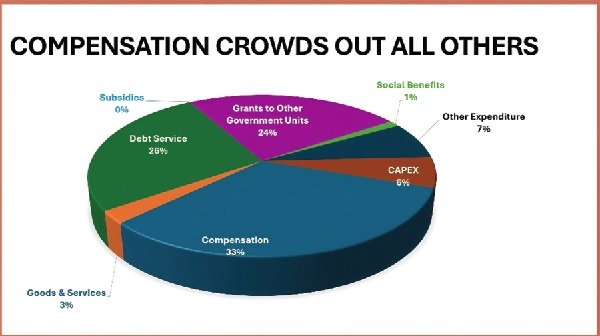
Dr. Forson described the situation as a major fiscal constraint, warning that the combined weight of wages, debt servicing, and statutory commitments now exceeds total revenue. This imbalance, he noted, is crowding out critical investments in infrastructure such as roads, schools, and hospitals—areas essential for long-term economic growth.
While acknowledging that fair compensation for public sector workers is a constitutional responsibility, the Finance Minister cautioned that the current trajectory is unsustainable. He stressed the urgent need for reforms to manage wage growth, strengthen revenue mobilisation, and restore fiscal balance.
However, labour leaders have pushed back, arguing that the problem lies not in excessive wages but in a weak revenue base. They have called for broader tax reforms and measures to curb financial leakages.
As the debate continues, one reality is clear: without decisive action, Ghana risks a future where borrowing to pay salaries becomes the norm rather than the exception.
Source: Graphic Online (Daily Graphic)